A trailer tire failure at highway speed can damage the trailer and leave a driver stopped beside a busy road. The failure may seem sudden, but pressure, load, speed, impact damage, age, and operating conditions can all contribute. No single cause explains every case.
This guide explains how Special Trailer (ST) tires differ from Light Truck (LT) tires, how underinflation can generate heat, how to interpret speed markings, and why tires can age while parked. Use the information for your specific trailer and tires rather than a generic pressure, speed, or replacement-age rule.
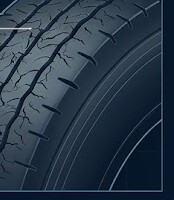
1. Special Trailer (ST) vs. Light Truck (LT) Construction
ST tires are designed for special trailer applications. LT tires are designed for light-truck applications. Their construction and ratings vary by model, so the category alone does not establish which tire can carry more load, tolerate more heat, or work on a particular trailer.
| Tire type | Intended application | What to verify |
|---|---|---|
| ST (Special Trailer) | Trailer service | Trailer maker approval, size, load and speed ratings |
| LT (Light Truck) | Light-truck service | Whether the trailer and wheel makers approve the application |
The structural trade-off
Trailer tires experience load and lateral forces while rolling behind the tow vehicle, while truck tires are designed for the truck's steering and drive applications. Sidewall stiffness, load capacity, and heat behavior depend on the specific tire, size, pressure, and load. Do not assume every ST tire has the same construction—or that an LT tire is a safe substitute.
2. The Physics of Under-Inflation: Hysteresis & Thermal Runaway
How underinflation can raise heat
A tire flexes as it rolls. This repeated deformation—known as hysteresis—can generate heat. If a tire is underinflated for its load, the extra flexing may increase heat and stress on its materials. The effect depends on the tire, pressure, load, speed, and conditions; there is no single PSI deficit or temperature that predicts failure for every tire.
In severe cases, increasing heat and flex can contribute to further deterioration. That sequence is a possible failure mechanism, not a diagnosis for every blowout.
Other contributors to tire failure
Overloading or uneven cargo distribution can exceed an individual tire or axle rating. Punctures, road impacts, valve leaks, damaged wheels, and unsuitable operating conditions can also contribute. A visual inspection alone may not reveal internal damage or the cause of a previous failure.
Underinflation may not be obvious by looking at the sidewall. Check pressure with a reliable gauge when the tires are cold, using the trailer maker's recommendation or the tire manufacturer's load-and-inflation guidance for the setup. The maximum pressure molded on a tire is not automatically the correct setting for every trailer.
3. Speed Ratings Decoded: Read the Tire's Markings
A tire's sidewall may include a speed symbol as part of its service description. The applicable symbol and operating limits depend on the exact tire. Read the manufacturer's documentation for that tire rather than assuming every ST tire has a universal 65-mph limit—or that a symbol is a recommended cruising speed.
Load, inflation, road conditions, ambient temperature, and the trailer maker's guidance still matter. Do not use a generic speed table, pressure increase, or load reduction as permission to exceed the limits for your tire, wheel, or trailer.
4. Tire Lifespan: Aging Out vs. Wearing Out
Trailer tires can see limited mileage and still age while parked. Exposure, storage conditions, use, and tire construction affect aging; appearance and tread depth alone do not establish that a tire is serviceable. There is no single three-to-five-year replacement rule that applies to every ST tire.
The Tire Identification Number (TIN), often called the DOT code, is molded into the sidewall. For tires manufactured since 2000, its final four digits identify the production week and year: for example, “3423” indicates the 34th week of 2023. The date code is useful history, not a universal expiration date; follow the tire manufacturer's inspection and replacement guidance.
When a trailer is parked, follow the tire maker's storage advice. Where practical, protect tires from prolonged exposure to heat, sunlight, ozone, petroleum products, and other chemicals. Before towing after long storage, inspect the tires and check pressure. Covers or other storage measures should be used as recommended for the tire and storage location.
5. The Pre-Trip Checklist: How to Reduce the Risk of Roadside Blowouts
- Check cold pressure. Use a gauge before travel and follow the trailer maker's recommendation or the tire manufacturer's load-and-inflation guidance. Do not release air just because pressure rises after driving; tire pressure normally increases as the tire warms.
- Inspect every tire, including the spare. Look for cuts, bulges, cracking, exposed cords, embedded objects, unusual wear, and signs of rubbing. Have anything concerning assessed by a tire professional.
- Check the load and ratings. Stay within the trailer, axle, wheel, and tire ratings, and consider how cargo is distributed across the tires.
- Review tire-specific speed guidance. Check the exact tire and trailer instructions, obey posted limits, and reduce speed when road, weather, or load conditions call for it.
- Check valve stems and monitoring equipment. Make sure stems, extensions, and TPMS sensors are compatible with the tire's pressure and the equipment maker's instructions.
- Watch for changes during travel. A TPMS can provide useful alerts but does not replace pressure checks or inspections. If you notice vibration, handling changes, or a warning, slow down and stop somewhere safe to investigate.
Bottom line
- Maintain the correct cold pressure and stay within tire, wheel, axle, and trailer ratings.
- Use the speed and service-life guidance for the exact tire; generic charts and fixed age rules do not fit every product.
- Inspect tires regularly, including after long storage, and take damage, repeated pressure loss, or unusual handling seriously.
For related towing checks, read how P-Metric and LT tires differ and how payload and axle limits affect a tow setup.